According to Human Rights Watch, a number of of the women had been lashed and given electric shocks, one was “made to hang for long intervals of time from the ceiling” and one tried a number of occasions to commit suicide. As of 21 November 2018[update], the women had been publicly accused of “undermining state security and aiding enemies of the state” however had not but been charged. In October 2013, there was a marketing campaign calling for women to defy the ban in a protest drive on 26 October, which gained assist from some prominent women activists. In response, the marketing campaign’s web site () was blocked within Saudi Arabia and Sheikh Saleh al-Lohaidan, considered one of Saudi Arabia’s top clerics, mentioned women who drive danger damaging their ovaries and bearing kids with clinical problems.
Criticism and human rights issues
She accomplished her bachelor’s and master’s degrees in the U.S. in sociology. A longtime advocate of girls’s rights, she took half within the kingdom’s first driving protest in 1990 and subsequent campaigns to end the ban on women driving.
One of probably the most well-known “hanging” judges in Iran was a cleric, Sadegh Khalkhali, the first head of the Revolutionary Court, who sentenced drug traffickers and former members of the Shah’s authorities alike to be shot. In 1982, a purge of the communists in Iran (such because the Tudeh Party) resulted in executions of the get together’s leaders and a few members on costs of spying for the Soviet Union. When the Islamic Penal Code of Iran was adopted in 1982, odd crimes started to be punished by hanging once once more by regular, non-Revolutionary courts.
As of May 2009, there have been at least 137 known juvenile offenders awaiting execution in Iran, however the total number could be a lot larger, as many death penalty instances in Iran are believed to go unreported. Of the forty three baby offenders recorded as having been executed since 1990, 11 had been nonetheless under the age of 18 on the time of their execution, while the others had been either saved on death row till that they had reached 18, or have been convicted and sentenced after reaching that age. In 2006, a teenage girl of the age of sixteen, Atefah Sahaaleh, was sentenced to dying, and executed two weeks later by hanging in a public sq. for the fees of adultery and “crimes in opposition to chastity”. Sentenced while underage, include a minimum of one at 13-12 months-old (executed when 21 years previous) and another at 14-yr-outdated (executed when 18 years old).
There is not any restrict on the number of instances that a defendant may attraction, but if guilt is established, the Court will affirm the sentence. In murder and rape instances, the perpetrator can say sorry from the victim’s household; in other instances, the perpetrator can ask for clemency from the “Amnesty and Pardons Commission” of Iran to cut back their sentences. Iran insists that the execution numbers human rights teams allege are exaggerated, and that executions are solely iranian bride carried out after a lengthy judicial process. Iranian officers cite that they are combating a big-scale drug warfare alongside its jap borders, and the increase of drug lords and sellers causes an increase in executions. The ban applies to state-run radio and TV, nevertheless it seems Iranians with satellite dishes will still have the ability to obtain broadcasts originating outdoors the country.
Some Muslims recommend that it is easier to fit in if they’re lax with the principles of their religion, for instance by carrying regular clothes. Muslim women’s clothes can differ from non-Muslim clothing to a hijab or a chador. Mohamed Elmasry, a controversial former president of the Canadian Islamic Congress (CIC), has stated that solely a small minority of Muslim Canadian women actually put on most of these clothes.
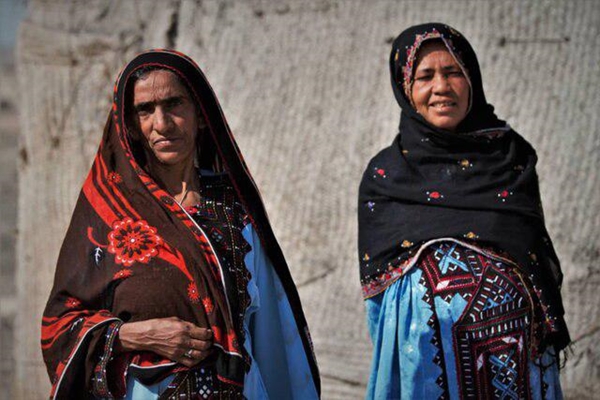
Hijab by country
Hijab was subsequently made necessary in authorities and public places of work in 1980, and in 1983 it grew to become obligatory for all women (together with non-Muslims and non-citizens). In Iran, since the 1979 Islamic Revolution, the Hijab has become compulsory. Women are required to put on unfastened-becoming clothing and a headband in public.
Covering the whole face was rare among the many Iranians and was principally restricted to local Arabs and local Afghans. Later, during the financial disaster in the late nineteenth century underneath the Qajar dynasty, the poorest urban women couldn’t afford headscarves.
The tour, named “Chehel Tikeh” (“Forty items”) is geared toward raising international awareness concerning the discriminatory bill.The banner was taken to Iran’s parliament, the Majles, a year ago, although MPs refused to just accept it. Fifteen thousand women signed a petition calling for a ban on polygamy, submitted at the identical time. Women’s rights activists are urging the Iranian authorities to outlaw polygamy, grant equal divorce and custody rights and create laws tackling domestic violence. At the moment married women in Iran could be prevented from working, leaving the nation or pursuing additional education by their husbands. It is difficult for a girl to divorce her husband with out his consent – even if he has been violent in the direction of her.

Masih Alinejad in 2015 launched My Stealthy freedom, which inspired Iranian women to publish footage with out their hijab. The reaction from the federal government has been severe; police have said that any women that participate in demonstrations towards compulsory hijab may resist 10 years in jail. The scenario turn into extra tense in April after a video was shared showing a women being slapped by a feminine member of Gast-e-Ersade (morality police) for sporting a unfastened headband. This incident also drew worldwide attention to the topic Iranian women had been dealing with.
Drunk driving
Soodabeh Salem and Sima Bina developed Iranian kids’s music and Iranian folk music respectively. Over the past two centuries, women have performed a distinguished function in Persian literature. Contemporary Iranian poets embrace Simin Behbahani, Forough Farrokhzad, Parvin Etesami.
To enforce this decree, the police was ordered to bodily take away the veil off of any woman who wore it in public. Until Reza Shah’s abdication in 1941, many women merely selected not depart their houses so as to avoid such embarrassing confrontations, and some even dedicated suicide.
Secularly oriented Iranians have tended to resent this dominant function of the spiritual outlook in politics and society, particularly its manifestations in quite a few laws and rules that they understand as interfering with their personal lives. Revolutionary credentials turned much less significant for the era that matured after the early Nineteen Nineties.